
• Skip to primary navigation
  • Skip to main content
  • Skip to footer
Margret E. Short Fine Arts

Margret E. Short Fine Arts

Portland, Oregon artist Margret Short - a modern day master of 17th Century Dutch art using the chiaroscuro technique to create still life and floral paintings.

  • Home
  • About
    • Margret E Short Bio
    • Resumé
    • Artist’s Statement
    • Artist Resources
    • The Lessons Series
    • Oregon Honor
  • Commission
  • Prints
  • Events
  • Galleries
  • Projects
    • Backwards and in Heels, Part II
    • Backwards and In Heels, Part 1
    • Quintessential Blue
    • Iso-LACE-tion: A Thirty Day Painting Project
    • Indigenous Naturals Project
    • Lessons from the Spider Woman
    • Girl Jazz Singers
    • Lessons from the Pharaoh’s Tomb, Part 1
    • Lessons from the Pharaoh’s Tomb, Part 2
    • Lessons from the Low Countries
    • Greek Pigment Project
  • Contact
  • Blog

Close Ups

July 30, 2011 by Margret Short

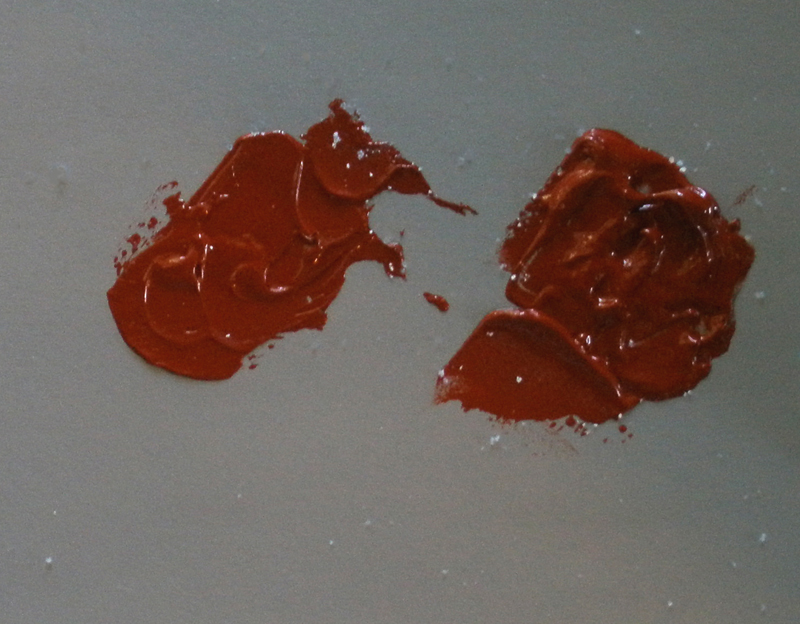
Fumed silica gel detail 100@8

This detail shows how the fumed silica gel changes the consistency of the paint. On the left is pigment mixed with linseed oil. On the right is the same paint mixed with about 1/4 part silica gel. The workability of this is just magnificent. It is fluffy and lightweight, has no odor, and stays where you put the brushstroke. It does not level out or run in any way. As far as I can tell it does not alter the appearance of the paint surface such as a medium with a varnish would. The benefits are bulk and  excellent handling of the paint.
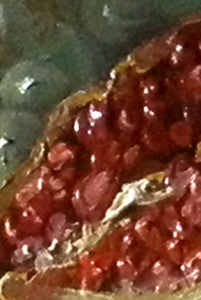
 

Pomegranate 100@3 bestIn this detail of a pomegranate from my Greek 5th century BCE painting, you can see how the seeds stand out. I layered the paint/silica gel mixture one on top of another to achieve the appearance of seeds as they are on the fruit. Then by changing the color, values, and consistency the texture built up across the surface of the canvas.

Again, it would be interesting to hear from any of you who have experimented with this medium.


Tagged With: fumed silica gel, Greek 5th century BCE, medium, oil painting

Chiaroscuro Painting

Oil painting with the chiaroscuro technique illuminates the focus area with a strong light. All other areas are painted with less detail, lower values, and intensity of color giving a mysterious appearance. By putting one or two objects in the important focus area, a strong but simple composition will emerge. Combining these oil painting techniques with a selection of superior natural pigments and oil paints result in the beautiful and evocative quality known as Chiaroscuro Painting.

Footer

Sign up for Margret’s Newsletter

Join Margret while she explores imagery and pigments used since 3500 BC!

Email Address:

Recent Blogs

Dancing Backwards Part ll with the Iconic Artemisia Gentileschi

Dancing Backwards in High Heels Part ll, More Lessons with Fred and Ginger and Judith Leyster in Haarlem

Dancing Backwards with Elisabeth Vigee LeBrun: Painter to the Stars and Royalty

Dancing Backwards in High Heels Part Two in Portugal with Josefa de Obidos

Dancing Backwards in High Heels Part Two; Cliff Notes Version of Color Sleuthing

[More Blog Posts]

  • Instagram
  • LinkedIn
  • Pinterest
  • RSS

Looking for Something Special?

© 2006 - © 2026 Margret E Short, all rights reserved