
It’s an endless saga, just a different woman in another country. It’s a wonder this artist made a name for herself having to combat such serious obstacles. Judith Leyster is yet another woman artist surrounded by setbacks and intrigue which involved fraudulent actions against her work, deliberate deception and misattribution of her work, and work that was mis-inventoried.
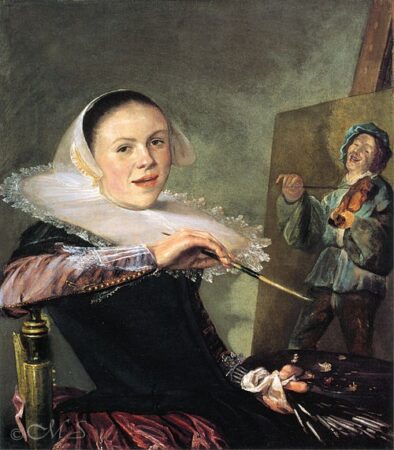
An Unrecognized Dutch Master
Judith’s life journey was not a long one having lived till only age 50 but her name survived through the centuries ebbing and flowing along the way. She should have been on the Golden Age of Dutch Masters roll call especially after she was given title of ‘master painter’ by the painters’ guild during her early years. But still today she has not risen to the status of other contemporary male masters though her work was deemed masterful.
Bravura Brushwork, Loose and Free
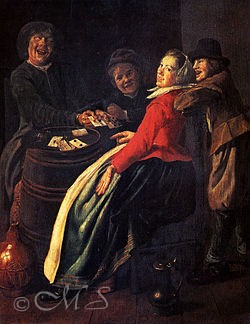
Judith Leyster was born in Haarlem in 1609 to Jan Willemsz a brewery owner and Trijn Jaspers a weaver. The brewery, named Lodestar, later became the family moniker. At nineteen she had already become a well-known artist during a time when few artists were women. Her success is documented in historical Haarlem city journals of the day. After her family moved to Vreeland near Utrecht, it became common knowledge that she was affiliated with the Utrecht Caravaggisti. However, her style did not reflect the dark mysterious affectation of the chiaroscuro technique. It is more likely Frans Hals and his circle influenced the young woman. Contrarily, her brushwork became free and loose, in a bravura style with fresh and lively coloration while still life and figurative painting became her signature oeuvre along with botanicals.
The Unfolding of a Convoluted Story
Most of Judith’s works that are documented as authentically hers were painted from 1629 to 1635. In 1636 she married the painter, Jan Liense Molenaer and subsequently gave birth to five children three of whom died before adulthood. During the years of family life, she chose to manage the household and her husband’s studio rather than work as an artist. Some of her work done during her married life has resurfaced in recent years.
Fraud and Intrigue and Lawsuits, Oh My!
This is where the intrigue begins. Leyster’s complete body of work was misattributed and ascribed to Frans Hals or to her husband Jan Molenaer. This could have possibly happened after her death when her work was inventoried as, “the wife of Molenaer.” Another such misattribution was thought to be an intentional fraud when Cornelis Hofstede de Groot—a Dutch art historian found her signature under Frans Hals’ name on a painting sold to the Louvre. A lawsuit later rectified the fraud, but the museum was reimbursed just 25% of the cost they paid for the painting. De Groot later found at least 6 more fraudulently signed paintings proven to be by Leyster.
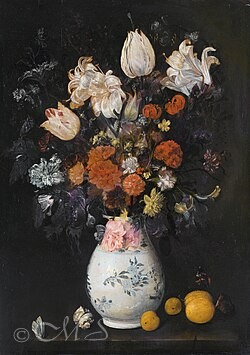
More discoveries were documented by art historian Frima Fox Hofrichter’s book Judith Leyster: A Woman Painter in Holland’s Golden Age (Davaco, 1989). Later in 1993, the Frans Hals Museum and Worcester Art Museum presented the Judith Leyster: A Dutch Master and Her World exhibit celebrating the 400th anniversary of her birth. Other entities later honored Leyster with similar exhibits. Happily, a previously known but hidden still life resurfaced from a private collector. It too had been wrongly attributed to Leyster’s husband, Molenaer, but finally Judith was properly given her recognition.
Antiques Roadshow Style
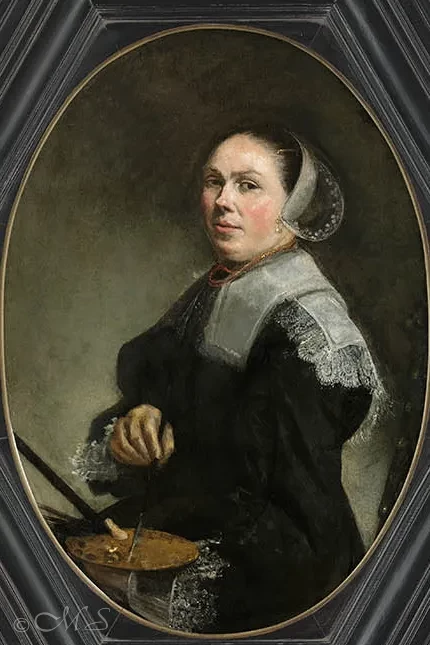
Just like an Antiques Roadshow episode, mysteriously another self-portrait surfaced in 2016. Christie’s Auction House was hired to appraise an English country estate where a Judith Leyster self-portrait appeared. The estate owners were completely unaware of the significance or value of the painting. It later sold at the auction for almost $600,000.
Today it seems that Judith has finally gotten some of the respect she deserved all along. Though only 35 of her works are authenticated, they are now either in museums or private collections. The odds were against her through all the frauds and deceptions, yet she persevered and came out the shining star among the galaxy of forgotten women artists of the past. If you want to read more about this astonishing story, a book deemed by Publishers Weekly to be a ’riveting debut,” by Carrie Callaghan called A Light of Her Own is still available. I just ordered a copy from ABE Books. Museum goers are fortunate that ethical and skilled historians have solved the puzzles and reaffirmed the correct attribution of at least some Leyster’s masterful paintings. Who knows what the future may find.
Dancing Backwards in High Heels Part ll Coming Soon to Bronze Coast Gallery, October ll, 2025.
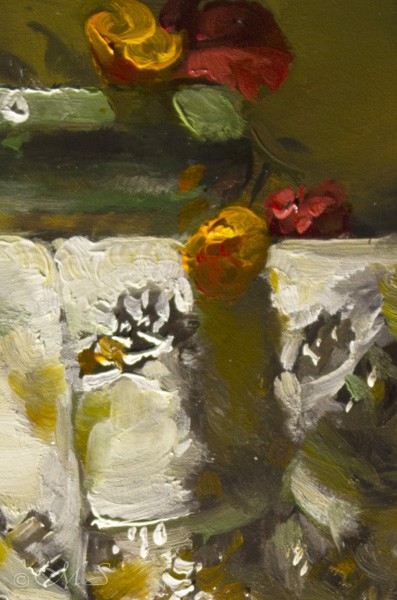
Judith’s self-portrait, seated painting a portrait above, was the palette inspiration for my painting. Because she lived and worked in the 17th century, she undoubtedly used many earth colors such as umbers, sienna both burnt and raw, yellow ochre, terre verte, and lead white along with madders, vermilion, ivory black, and a blue of some sort. It’s astonishing the range of colors that can be achieved with just a handful of pigments.
I always wonder if the maker of the crocheted lace had as much fun as I do while putting it to canvas. I love using free and loose brushstrokes to portray the essence of the threads and stitches. A warm dark undertone is an essential component to the composition. Have any of you painted lace and used a different technique! I would love to know your approach.
Time is drawing near with just 3 more artists to reveal.
Leave a Reply