
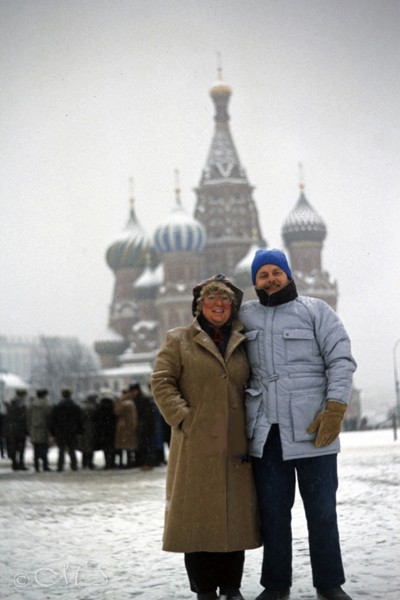
I chose the artist, Marianne Von Werefkin, as my final series post for the simple fact of her country of origin, Russia. It is a place very mysterious to us here but nonetheless has immense historical intrigue. Dave and I had the great fortune to travel there in 1985 when Glasnost was just beginning, and though we subsequently traveled to many other countries, this remains my favorite. We walked through Red Square in 30 inches of snow on Thanksgiving Evening and sipped champagne with our dinner of Chicken Kiev and caviar at the Winter Palace Pectopah. We spent three full days wandering the galleries of the Hermitage Museum including the room with 20 Rembrandts. Such wonderful memories! You can read more about our adventures in a previous blog story, part one and two.
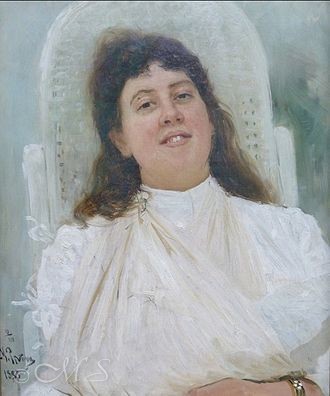
Marianne Von Werefkin was born in a palace in1860 in Tula, Russian Empire during the reign of Alexander ll Czar of Russia 1855-1881. He was known as the Tzar Liberator for granting freedom to millions of serfs. In addition, he initiated judicial and military reforms along with advancements in education. No doubt this was a period of enlightenment because of his actions. Marianne was born into a family of nobility. Her father Vladimir Nikolayevich Veryovkin was a commander in the Imperial Russian Army and her mother, Elizabeth nee Daragan came from an old family of Cossack princes.
A Room of One’s Own
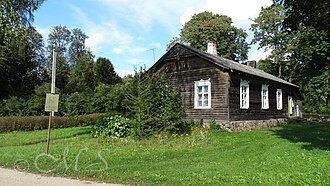
Marianne’s artistic talent was discovered early and she received instruction soon after. By the time she was a teenager she had her own studio in the Peter and Paul Fortress and an atelier at the family summer home in Lithuania. This was at the time occupied by Russia. At age 20, Marianne became a private student of Ilya Repin, the realist artist and revered member of the wandering painters. She was immersed in a life of artistic expression throughout this time attending lectures by Vladimir Solovyov and classes with Illarion Pryanishnikov. She later became known as the Russian Rembrandt of the Tzarist Empire, but later her style evolved into Impressionism.
A Baffling Union
For 27 years, Marianne had a baffling relationship with a penniless miliary officer, Alexei von Jawlensky, who was five years her junior. Perhaps their mutual passion for art was the attraction. That she supported and shared her knowledge of art for all those years is inexplicable. In a truly tragic hunting accident during this time, Marianne suffered an injury to her right hand (her painting hand) which impaired her progress for many years. She then moved to Munich where she met Wassily Kandinsky and helped found the Blaue Reiter group. Thus the new Expressionist period was launched.
Like other featured artists in this series, Marianne was blessed with support from her father. After his death she was given a noble Tzarist pension of 7000 rubles per year. As a comparison, during that time an average salary in Russia was 189 rubles per year per person. So, her 7000 would be a whopping amount.
Lies and Betrayals
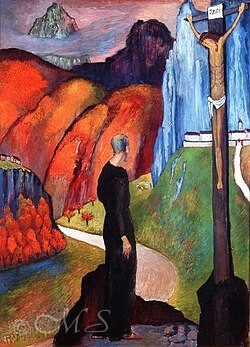
By now she had devoted many years to Jawlensky who treated her dreadfully. Because her pension was from the Tzar she was not allowed to marry but she continued to support her lover. Werefkin led a convoluted life full of betrayals, jealousies, lies, and deceits related to him all the while continuing to paint. She experimented with gouache and tempera using vibrant colors and bold shapes. She emulated other Expressionists like Gauguin, Emil Nolde, and Edvard Munch. She founded the Brotherhood of St. Luke whose members followed the tradition of the Guild of Saint Luke.
Marianne finally broke with Jawlensky after moving to Switzerland during the war and remained there until her death. During the war her pension was cut in half. After the Russian Revolution, it was totally revoked. She continued to create and experiment founding many more artist guilds and organizations. I could find no evidence that she had children. Upon her death in 1938, she was buried in a cemetery in Ascona, Switzerland in the tradition of the Russian Orthodox rite. In spite of the staggering on-going maltreatment from Jawlensky, she persevered and followed her artistic journey till the end.
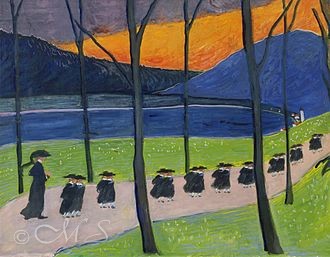
Though Marianne’s work strays significantly from other styles shown in this series, her colorful life is certainly worth featuring, and more importantly, her palette is stunning and exciting to emulate. I hope you agree. For now, this is the final post in the Dancing Backwards Part ll. But who knows what the future might bring. There are certainly countless more inspiring forgotten women artists with fascinating lives out there for the finding.
Dancing Backwards in High Heels Part ll, Coming to Bronze Coast Gallery, Cannon Beach, Oregon, October 11, 2025, 1:00 to 3:00.
Leave a Reply