
Elisabeth Vigee LeBrun lead a life of political intrigue and privilege. She met and mingled closely with royalty achieving the status of court painter to Marie Antoinette. Throughout her career, she would paint more than thirty paintings of the last queen of France and her family. The French Revolution interrupted her stellar reputation and career forcing her to flee to Rome and Russia, among other places, for her safety. In spite of professional accolades, LeBrun faded from the history books like so many other accomplished women artists of the past. At the very least, she was never given the full attention she deserved.
From Convent to Stardom
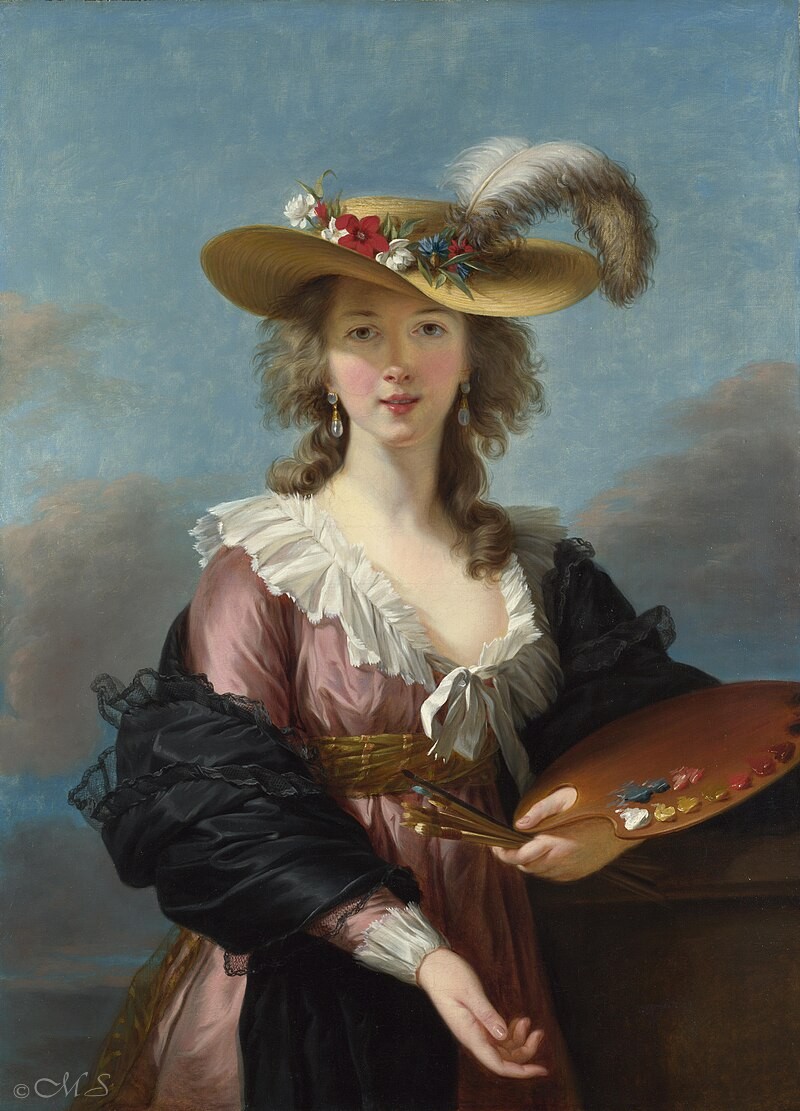
Vigee LeBrun was born in Paris in 1755 to artist Louis Vigee and Jeanne Maissin a hairdresser. Her early years were spent in a convent until age 11 when her father became aware of her artistic proclivities. Early in her teenage years, she was forced to contribute to the family by becoming a professional artist with paying clients. In 1789 she applied and was accepted into the Academie de Saint-Luc where she was allowed to exhibit.
About this time, she met Gabriel Francois Doyen, the history painter/academician who was inspired by Rubens. She was under his tutelage along with Gabriel Briard also an academician. Elisabeth’s mother encouraged her and supplied her with materials necessary for her training. The Palais du Luxembourg and Palais Royale were visited frequently by both Elisabeth and her mother for educational purposes.
Marie Antoinette: the Ultimate Collector
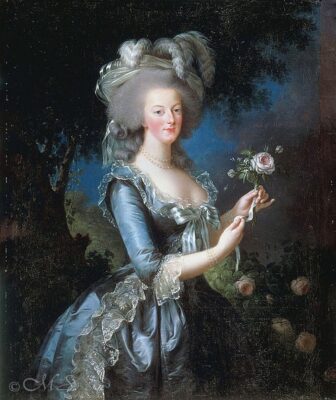
After marrying the art dealer Jean-Baptiste Pierre LeBrun in 1776, Elisabeth was commissioned to paint a state portrait of Marie Antoinette in Versailles. After her membership into the Academie Royale de Peinture et de Sculpture was reinstated (it was revoked because of her connection to an art dealer) by the king and queen, she submitted an allegorical themed piece into the Salon exhibition. LeBrun attained major success in many subsequent salons exhibiting both portraits of the royal family and historical paintings, and created quite a stir because she was a woman.
Fleeing the Revolution
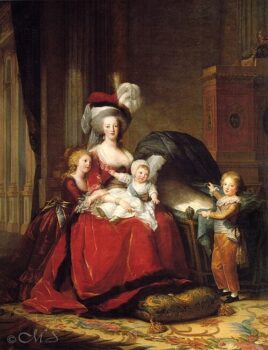
Societal restrictions against women were relaxed somewhat during this period and the newly divorced LeBrun took advantage of this freedom to travel to Italy to flee the Revolution.
Other destinations were Belgium, Switzerland, Austria, and St. Petersburg where Empress Catherine ll appointed her a member of the Academy of Fine Art. LeBrun ultimately went to London to paint various portraits of notables such as the Prince of Wales, Lord Byron, and Mrs. Chinnary.
A Dozen Years of Travel
During her dozen years of travels abroad, Elisabeth created a second career wave painting portraits of the aristocracy in many countries. This work supported both her and her daughter. After her final return to Paris, Elisabeth continued painting and exhibiting as late as 1824. Her very popular memoir, Souvenirs, portrayed not only late eighteenth and early nineteenth century European culture but also her long prosperous and fruitful life. Elisabeth died in Paris in 1842 at the age of 87. Though enormously popular and successful during her lifetime, she has been given only cursory mention in historical literature.
Dancing Backwards in High Heels: More Lessons from Fred and Ginger, Coming Soon to Bronze Coast Gallery, October 11, 2025, Cannon Beach, Oregon
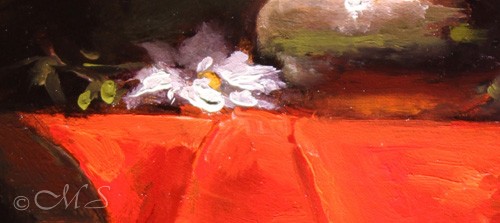
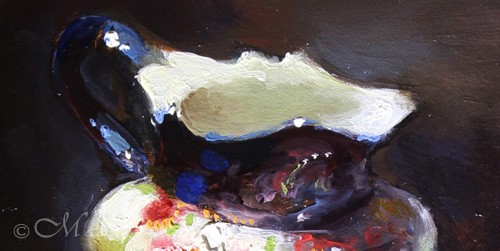
Elisabeth Vigee LeBrun was particularly inspiring for this project, so I have chosen two of her paintings for my source palettes. Here are detail snippets of both paintings to be revealed on October 11. Living and working in the 18th and 19th centuries, meant that LeBrun had access to many of the newly known pigments. I used vermilion, yellow ochre, and ultramarine blue here. Remember, to identify the exact pigments used, the paintings must be scrutinized under a microscope. Can you guess what other colors I used?
Leave a Reply