
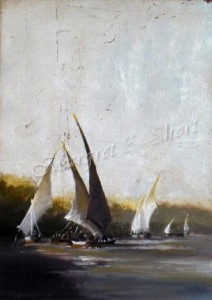
Felucca Study # 2 Oil on Silver Leaf, 7x5 ©Margret E. Short, OPA, AWA, Galerie Gabrie, Pasadena Lessons from the Pharaoh's Tomb, Part Two … [Read more...] about Felucca Study #2
Pigments: Historical and Modern
There is a distinct difference between modern day pigments and the natural pigments used prior to the middle of the 1700s. In the past, artists had apprentices who ground the colors for them throughout the oil painting sessions. Because they were made by hand, the pigments retained a natural grittiness and consistency with larger particle size. Today's oil paint manufacturers make synthetic colors in huge vats where the end result is exceptional smoothness. Prior to the middle of the 1700, natural pigments came from dirt, minerals, and even plants.
Felucca
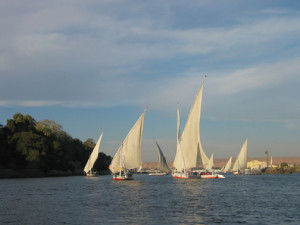
What do Winston Churchill, Mark Twain, King Farouk, and Dave and Margret Short all have in common? We all sailed down the Nile while visiting the magnificent antiquities of Egypt......in a felucca! This graceful sailing vessel is motor-less and relies on the Egyptian southerly winds to push it upstream. These winds build during the day and … [Read more...] about Felucca
From Cairo to My Easel
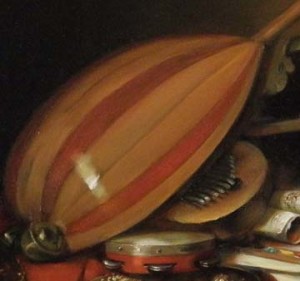
Detail of the final painting, Festival of Opet, for the Pharaoh Part ll Exhibit, featuring the Oud. This instrument is also known as the ud. Copyright Margret E. Short, 2011 … [Read more...] about From Cairo to My Easel
More Mummy Tales
Many followers of this blog often ask if I had ever read anything about a pigment called, mummy yellow, or mummy brown. Well, I have, and this is probably the most bizarre and creepy pigment story yet. In her book, Colors, Anne Verichon says that in ancient Egypt mummy yellow was sacred because it was made from real mummies. In the embalming … [Read more...] about More Mummy Tales
Irresistible
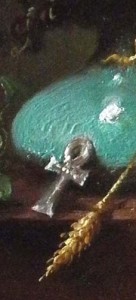
The combination of malachite with azurite makes the most luscious pigment, and I just can't resist using lots of it. This detail shows a small jar in one of the new paintings in the Part ll project. … [Read more...] about Irresistible
Details Please
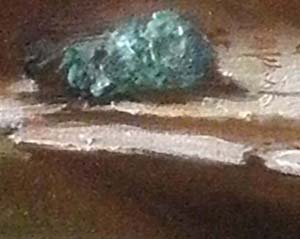
This detail of the same painting shows a chunk of malachite similar to those found in the Egyptian rooms at the Smithsonian. I thought it fitting to portray the mineral as the ancients would have found it before it was ground into a pigment. … [Read more...] about Details Please