
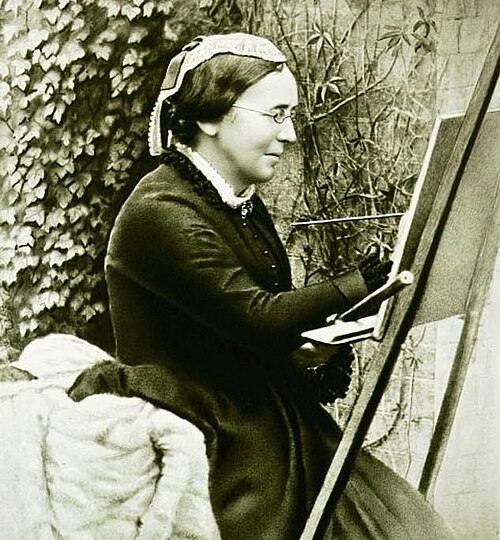
Friend of and encouraged by naturalist Charles Darwin and painter Frederick Church, Marianne North was perhaps one of the most prolific yet unsung artist/recorder of the botanical world ever. Traveling to no less than 15 countries in the Victorian era was in itself a daunting legacy, but to top this, she did it mostly solo. Throughout her 50-year career, she made a name for herself as a trailblazing fearless artist who documented natural flora around the globe.
Many Perfect Parallels
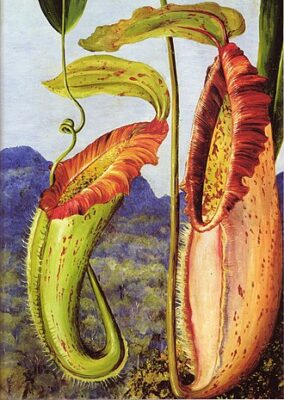
Marianne’s painting life and canvases can be compared to that of Rachel Ruysch, featured in this series, in many ways. They were both fascinated with the natural world and art. But the differences were great too. Rachel married and had 10 children, but North never married and turned her devotion to nature’s bounty then set out to put that world down on canvas. Marianne’s forte became her ability to portray plant life in its living environment. Both Rachel and Marianne deepened the appreciation of the beauty of our surroundings along with promoting the importance of nature’s ecosystems.
Rare and Unacceptable, Of Course
As we have discussed before, during the Victorian Era, restrictions on everyday life for women were severe. Societal customs established a narrow pathway for women as they were forced to accept the obstacles life handed them. To follow a life beyond domesticity, marriage, and motherhood was not only rare but also unacceptable. But Marianne rebelled against those barriers on every point and began a life based on her own terms. Born in an English educated family of means in 1830, she was able to pursue her growing interest in art and nature.
Emboldened
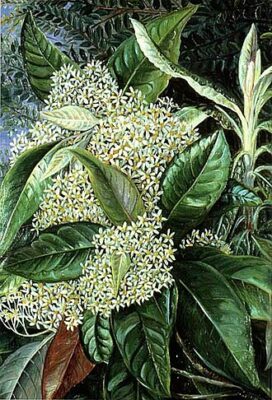
Like other women artists featured in this series, Marianne’s Father, Frederick North, was also a free-minded man who encouraged his daughter to reach beyond life’s barriers. This support emboldened her to seek a life outside of her comfort zone. In the ensuing years, her travels took her to Canada, the United States, South America, the exotic Jamaican terrain, the rainforests of Brazil, and later to Japan, Borneo, the Amazon, Africa, Australia, the Himalayan foothills, India, and many others.
Snakes, and Bugs, and Vermin, Oh My!
Along the way in her travels, she encountered heat, cold, rain, wind, vermin, snakes, bugs, and all kinds of critters and creatures. All while painting in the wilderness wearing a heavy dark dress that reached to the jungle floor. En plein air painting, in the best of circumstances, is a challenge but under these conditions would be brutal.
Many years ago, I was painting on the bank of the Molalla River in rural Oregon when a gust of wind burst out of nowhere, and lobbed my easel and painting first airborne then into the whitewater rapids. Both bobbed along the surface like a skipping rock until they finally disappeared in the current. A teenager watching this folly on the sidelines, saw my distress and saved the day by diving in and retrieving both easel and soaking canvas. Another ridiculous outdoor painting attempt involved a very large bullfrog. This rude and uninvited guest appeared and suddenly launched itself out of the pond that I was sitting by which was my painting subject. It lazily hopped across my freshly finished painting and created an entirely new composition to his liking. I knew at that moment that literally everyone is a critic. These were minor inconveniences compared to anything Marianne encountered.
Enough to Last a Lifetime
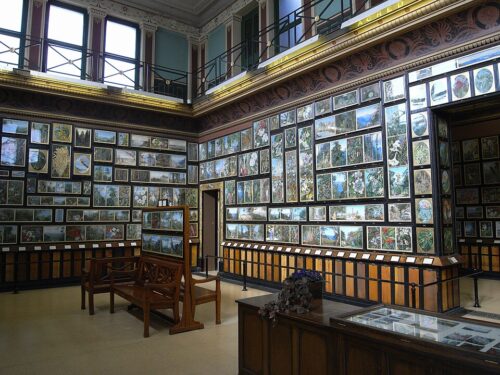
Everywhere she went, the pulsating colors and delicate forms including tea and coffee plants captivated her artistic senses. I can only imagine the excitement she felt upon discovering the endless variety of hues and shapes; enough subject matter to last a lifetime. In all, Marianne produced over 800 canvases depicting the diversity of Mother Nature’s beauty. Many of the remaining body of work is housed in her personal gallery at the Kew Botanical Gardens.
Hues, and Shapes, and Beauty, Oh My!
In spite of this monumental legacy, Marianne remains largely an unsung artist/documentarian like so many other women. Undoubtedly, this is for the same reasons that plague previously highlighted artists in this project. Adventurer, traveler, courageous, talented, fascinating, bold, tenacious, curious, resolute, and persistent, all are words that describe Marianne North. Can you think of more? I certainly am delighted to now know about this heretofore unknown to me, astonishing woman who made remarkable contributions to both science and art.
Bronze Coast Gallery
Dancing Backwards 3 Coming in September 2026 at Bronze Coast Gallery, in Beautiful Cannon Beach, Oregon. The legend of ” Ginger Rogers did everything Fred Astaire did only backwards and in high heels.” Ann Richards.
Images courtesy Wikipedia Public Domain
😂I remember that bullfrog!
Me too! It was huge!