
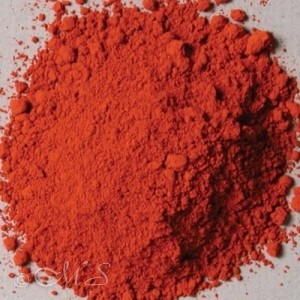
George O’Hanlon’s Best Painting Practice Class held in Portland this past weekend was a treasure trove of valuable information. Much of the information presented was material I have studied over the years since my art quest began, and happily, there were many nuggets presented too. The topics of materials, techniques, mediums, oil painting … [Read more...] about Iron Oxide Pigments, Colors and Uses in Oil Painting
Pigments: Historical and Modern
There is a distinct difference between modern day pigments and the natural pigments used prior to the middle of the 1700s. In the past, artists had apprentices who ground the colors for them throughout the oil painting sessions. Because they were made by hand, the pigments retained a natural grittiness and consistency with larger particle size. Today's oil paint manufacturers make synthetic colors in huge vats where the end result is exceptional smoothness. Prior to the middle of the 1700, natural pigments came from dirt, minerals, and even plants.
An Exquisite Touch of History – William Merritt Chase
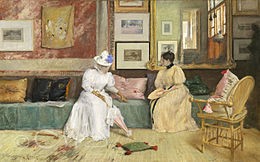
The re-known artist/teacher and fellow Salmagundi Club member, William Merritt Chase, once said, "Painting is the Most Magnificent Profession." Though he was born at the middle of the 1800s and died in 1916, he and I are kindred spirits in this belief. There is nothing more enjoyable than observing a splendid sunset and recording it on canvas, or … [Read more...] about An Exquisite Touch of History – William Merritt Chase
Composition Juggling
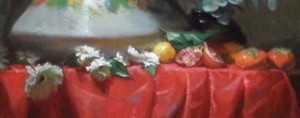
Sometimes in the process of working on a painting, things change. Things that seemed perfectly placed just do not come together as planned. If you are lucky this does not happen very often, however for the painting on my easel at this time, I had to juggle some of the objects to make my concept work better. As you can see, I initially placed some … [Read more...] about Composition Juggling
Final Results – Stack White Process – Part lV
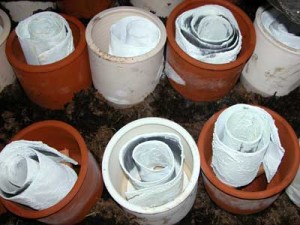
Stack pots after two weeks of corroding. The smell of acetic acid (vinegar) is still present inside the stack shed, but not as sharp as it was initially. The temperature within the compost heap is raising, but on the surface it is still at ambient temperatures. Flakes have formed on the lead coils. The relative humidity inside the shed is nearly … [Read more...] about Final Results – Stack White Process – Part lV
On the Easel
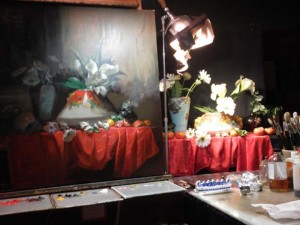
Often followers ask about current projects. Though at this time, I have no in-depth project involving an ancient culture or goddess from an ancient world, there are endless pigments, mediums, brushstrokes, or canvas textures to investigate. On my easel right now, is the painting posted here in its early stages of development. Dramatic light is … [Read more...] about On the Easel
Stack White Process – Part lll
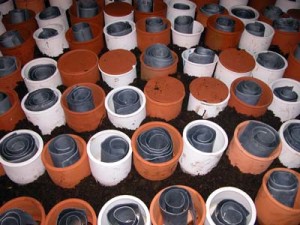
In the next step of the lead white making process, specially made earthenware pots were arranged and then filled about one-third with vinegar. You will notice a variety of pot colors which indicate varying amounts of lead inserted into certain pots which were processed differently. The rolled lead coils were then placed into the pots. Some pots … [Read more...] about Stack White Process – Part lll