
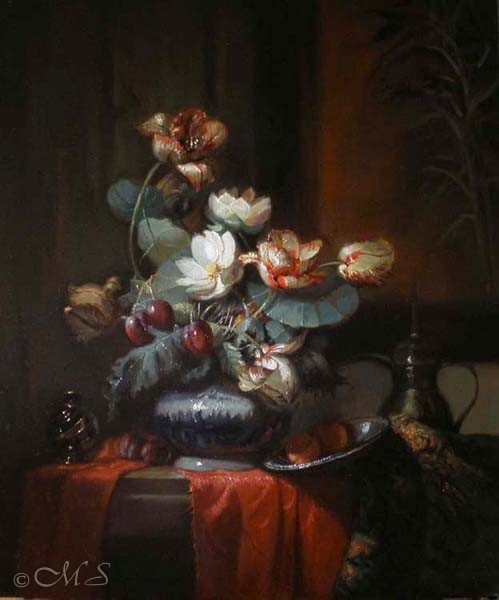
28″ x 22″ – Oil Private Collection Lessons from the Pharaohs Tomb 2009 showing lapis lazuli on the vase and cinnabar in the cloth.
Throughout the ages, since the very first scrawls were made in caves and tribal hunting events were recorded on walls, people have been using colors made of ochres, umbers, madders, bugs, mummies, minerals, shells, iron oxides, and plants. These pigments decorated sheets of papyrus, vellum, paper, faces, bodies, fabrics, clothing, tools, leather, weapons, walls, ceilings, and stones far and near.
Charred Bones and Noodles
People perhaps just hacked a chunk off the cave wall and started noodling, or charred a bone from last night’s dinner, or took a stick from the fire and began to make marks. The earth itself for thousands of centuries has created a harmonious palette of archival and readily available colors to create some of the most beautiful and enduring art in the world.
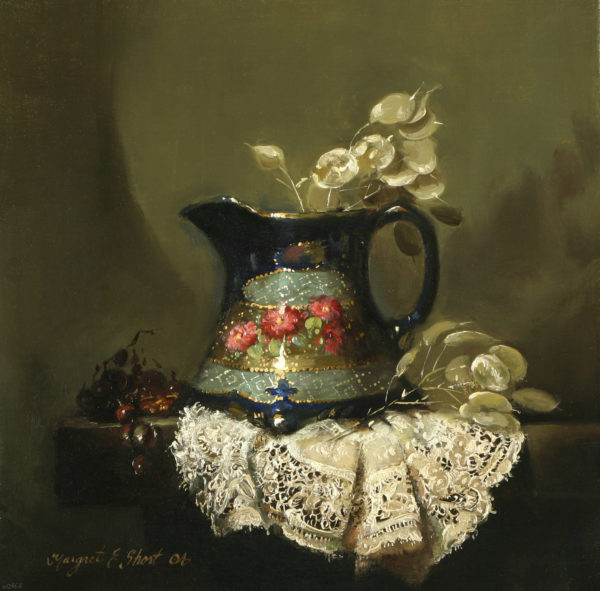
Margret E. Short, copyright 2006/7, showing lapis lazuli. Private Collection
Earth’s Harmonious Palette
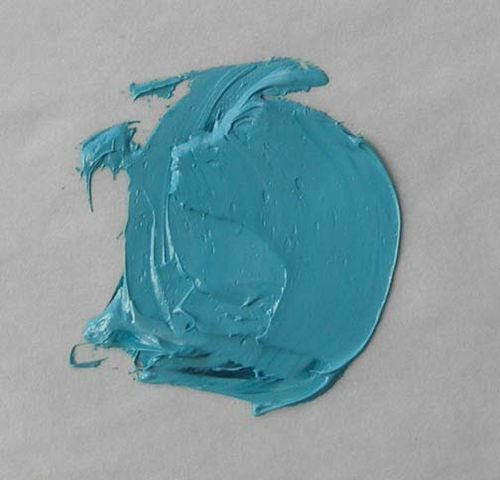
Today, artists around the world are still using many of those same pigments as used in the past. Thanks to specialty companies, we know more about the composition, archival quality, rarity, cost, permanence, transparency, opacity, toxicity, saturation, drying times, and source of these pigments — issues which are enormously important to artists. This topic has remained a passion for me over the years, and I have experimented with most of the available historical pigments in one way or another, creating several in-depth projects that involve both artistic and cultural research. The most profound characteristics discovered are that these pigments are splendid to work with and endlessly beautiful.
Mother Nature’s Beauty
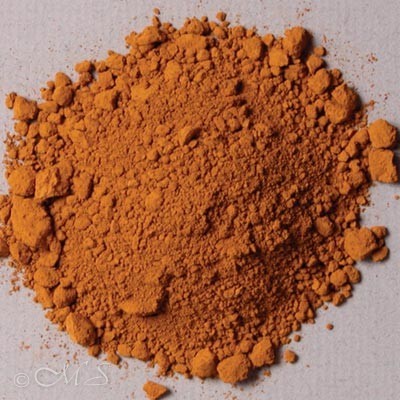
Mother Nature herself has done the palette preparation work for me, as the natural, subtle, muted quality is all ready to go. Time has aged the ochres into dazzling arrays of warm and cool yellows that, when placed side by side, are instantly pleasing to the senses. The umbers work in the same way and come in stunning varieties of light, medium, and very dark, depending on the source. Lapis lazuli, azurite, malachite, and ivory black comprise my list of favorites. Technically not an earth color, but manufactured by the ancient Egyptians, Egyptian blue frit is a clear crisp color used to decorate the dizzying riches of the Pharaohs.
Mad Scientist Gets Restless
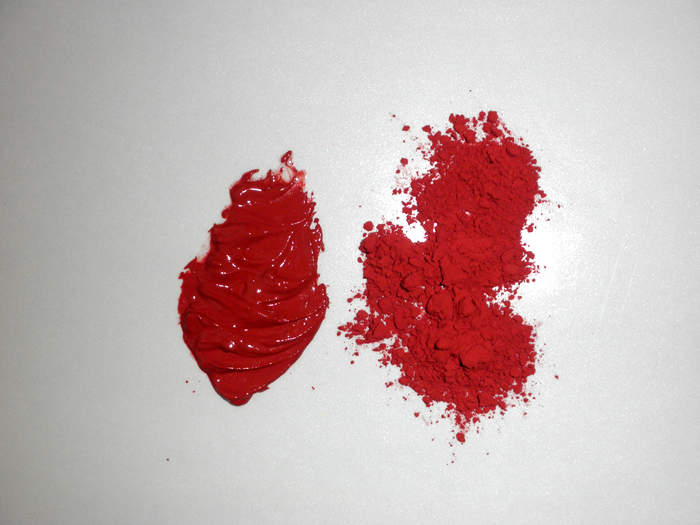
Natural cinnabar, my favorite red mineral pigment, formed eons ago by a perfect marriage of mercury and sulfur is mined in Spain, Russia and the west coast of the US, and at one time Oregon where I live. You can see the beauty in the muted hue, which is not garish at all. To my eye, the modern cadmiums are so highly saturated they overpower my canvas and are difficult to handle on the palette. I find this true also of other modern colors such as phthalo greens and blues. Occasionally, when my mad-scientist self gets restless, I break out of this mold and experiment with some of the modern azo, turquoise, and quinacridones, but I usually will spend time muting or graying them down in some way.

Lessons from the Low Countries Pigment Project 2006/7. Cinnabar and madder were the sole pigments used in the tapestry. Madder comprised the iris and lead white in the satin-like fabric. Lead white is one of the colors I do not make by hand.
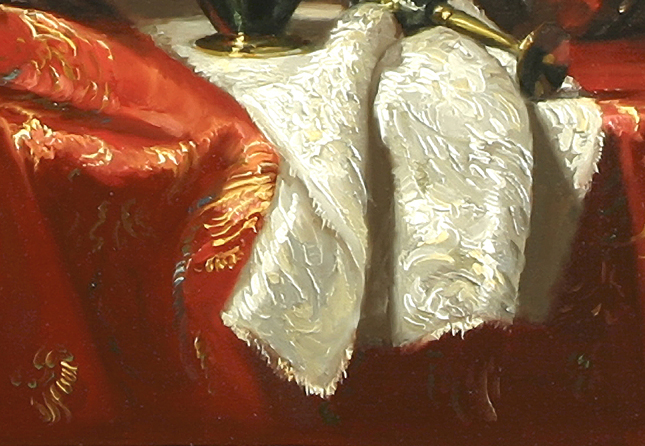
Lessons from the Low Countries Pigment Project 2006/7
It’s Easy Once You Try It
Contrary to common knowledge, making hand-made paints is relatively easy once safety precautions are in place. All you need is a mask, a little oil, pigment, a grinding slab, and a muller. The dry pigment powder is mostly ready to go and just involves mixing in the oil to make sure all of the pigment disperses with the oil.
Margret E. Short Copyright
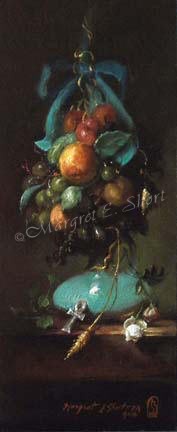
12″ x 5″ (detail) (Egyptian green frit) Lessons from the Pharaoh’s Tomb 2009. Amazonite was used for the vase and a variety of earths throughout.
Another common misconception is the natural pigments are too toxic to handle carefully. Actually, there are only a few that have warnings and with caution, those can be handled too. I always use a respirator and gloves while wearing a smock, and most importantly, I grind the paint in an area with no breeze such as a fan or blowing furnace vent.
Advice from an Art Forger
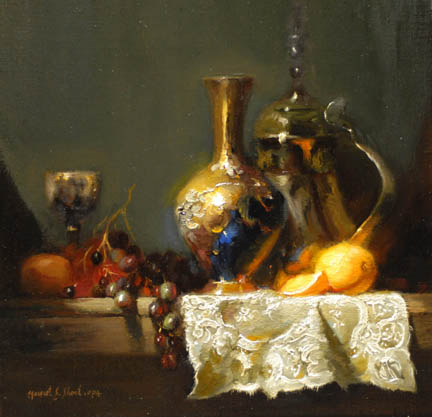
Rather than using orpiment, which is problematic and toxic, I use chrome yellow at the suggestion of Eric Hebborn, the infamous art forger. (He implemented this ploy when repainting over old canvases that he intended to sell as fakes). You can see chrome yellow mixed with cinnabar here on the tangerines in The Golden Age. The range of colors is amazing when using just a few earth colors. Rembrandt had about 20 in his repertoire. It really is a process of elimination. I use just the colors that are safe after they are encased in oil and toss out the fugitive (many of the plant-based colors) or toxic colors. I use caution and strict hygiene habits while painting. Most importantly, the mere fact of having a few select colors on my palette to deal with allows easy and quick decision color mixtures.
A Growing Interest
More and more interest in hand-ground paints made from natural pigments is surfacing over the recent years. I invite you to choose a few colors, (even if you do not grind the paint yourself, purchase the ready-made), and experiment. Do some studies and see the difference in the surface quality of your canvas. Make that connection between you the painter, the aesthetic of your art, and your materials. The results just might be profoundly gratifying.
First published in November of 2021 as guest blogger of Oil Painters of America website. Lessons from the Low Countries 2006 Margret E. Short Copyright Lessons from the Pharaoh’s Tomb 2009 Margret E. Short Copyright
Dancing Backwards 3
Many of these pigments will be used in Dancing Backwards 3 Coming in September 2026 at Bronze Coast Gallery, in Beautiful Cannon Beach, Oregon. The legend of ” Ginger Rogers did everything Fred Astaire did only backwards and in high heels.” Ann Richards.
Every time I read your blogs I am amazed at you.
You are not the same person I knew up at camp.
Life goes on. Miss you, take care of yourself.
Love David & Kay.
Hello David and Kay, It was always there I just didn’t know it then. Thanks for the nice compliment. Life does keep rolling on doesn’t it, sometimes too quickly. Nice to hear from you. You take care.