
Many common threads keep poking through the fabric of the stories of forgotten women artists. Like many of the previously featured women, this story illustrates the impact of strong family involvement in the development of young artists, especially the fathers. The 22nd artist to be featured in this series, Frances McDonald MacNair is no exception.
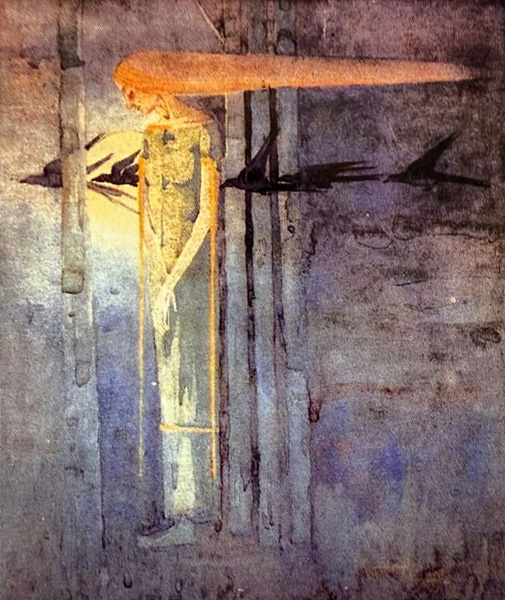
Frances was born in England in 1873 into an educated family. Her father was an engineer and gifted inventor who encouraged the young Frances and her older sister, Margaret, to pursue a love of art. After the family later moved to Glasgow, the sisters enrolled in the Glasgow School of Art. They both exhibited a flair for design and soon developed a reputation for their personal distinguishable style. Along with two fellow students, Charles Macintosh and Herbert MacNair, they organized an up-and-coming circle of artists known as The Glasgow Four. Their signature style was inspired by Art Nouveau, Celtic imagery, and symbolism.
Fertile Imaginations at Work
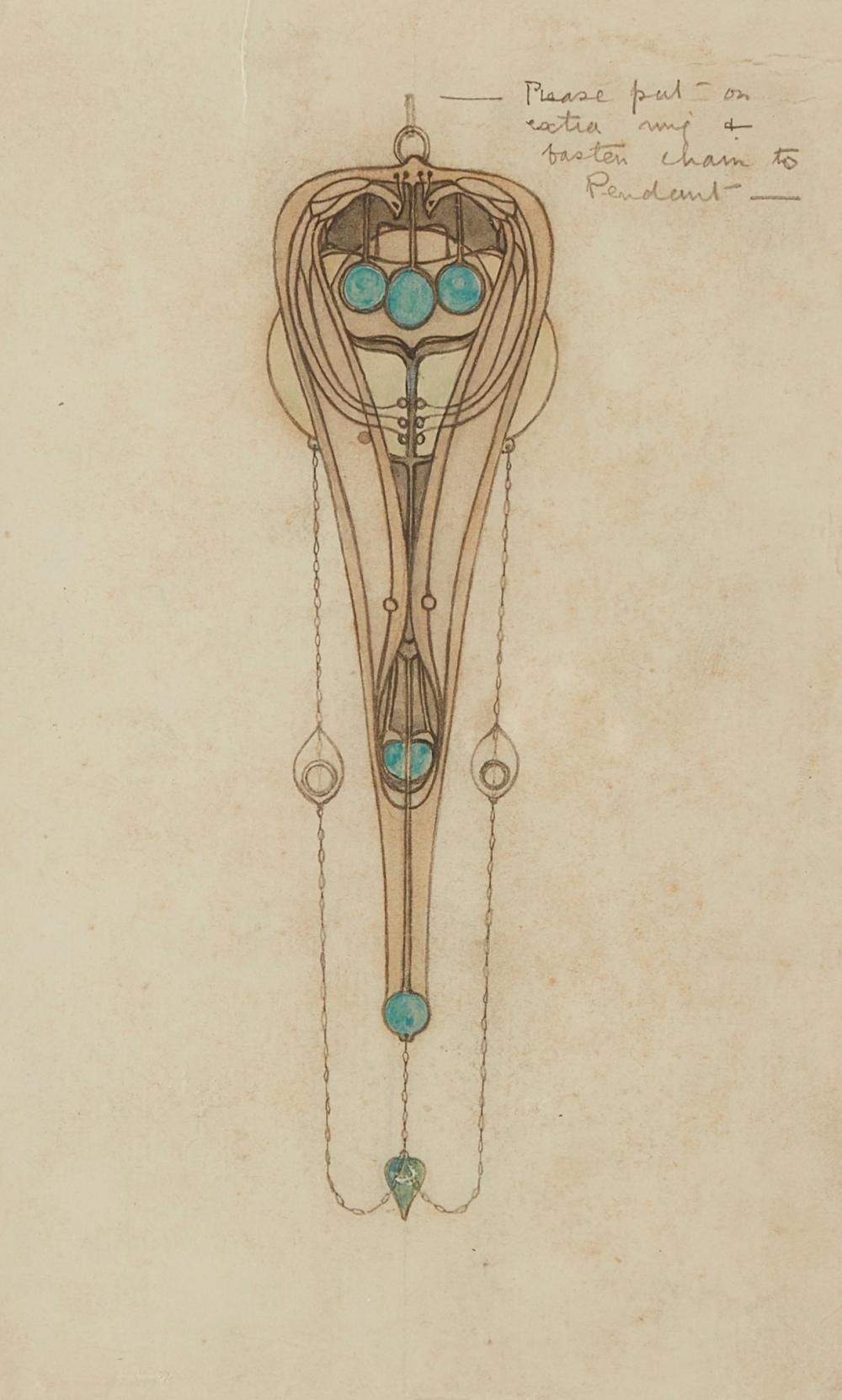
Glasgow was a central hub of eager young students with creative ideas while the school thrived and welcomed innovation, seemingly even from the female students. During this time, Frances began to cultivate her personal ideas of design visualizing ethereal curving lines with Celtic and spiritual influence. Both she and Margaret flourished as they began to try out various media such as painting, embroidery, jewelry, interiors, furniture, and metalwork.
Imagine This
I can only imagine that these were heady times for the sisters with days spent creating and experimenting in classrooms at a school they both loved. Frances ultimately married Herbert MacNair and Margaret likewise married the fourth member of The Glasgow Four, Charles Mackintosh. The four of them continued to make and design all kinds of art always collaborating on varying projects. Flowing elongated human forms, organic shapes, and intricate details dominated the Art Nouveau influenced pieces.
Tea at Miss Cranston’s
Margaret and Frances collaborated on many projects creating textiles, paintings, and interiors including the décor of Miss Cranston’s Tea Rooms in Glasgow which morphed into the Glasgow Style.
Sadly, as so often happens, Frances’s work was ultimately labeled as too feminine and decorative due to the not unexpected criticizing of female point of view styles. In a world always controlled by men, the women get pushed aside and discarded as unimportant. As time passed, Herbert’s and Charles’s careers thrived while Frances’s and Margaret’s faded into the background, and Frances began to suffer from depression. Her marriage then began to crumble because of financial problems.
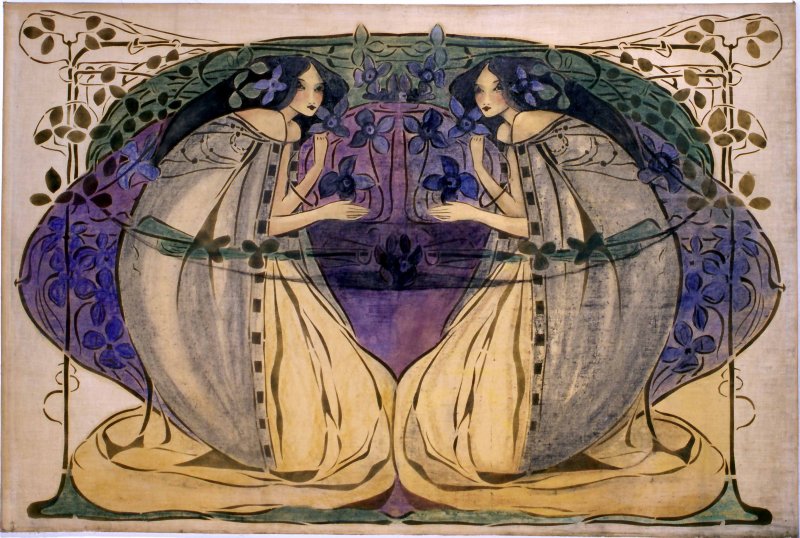
After a move to Liverpool, Frances continued to work and experiment with various mediums, but she was never able to attain the level of recognition as the two male members of the Glasgow Four. Her marriage finally failed and the Art Nouveau movement fell out of fashion which began the long slow tumble into oblivion for her work. As you probably have guessed, Charles and Herbert continued to gain accolades for their work as innovators of the artistic era.
A Not Surprising Sad Ending
After Frances’s reputation as a successful and talented trendsetter plummeted, she fell into a deeper depression and took her own life at age 48. Once again, societal obstacles prevented a remarkably talented woman from coming to her full maturity as a creative and contributing to that society that failed her.
Dancing Backwards Part 3: Reception, Saturday, September 12, 3 to 5 o’clock
Nine new paintings to be revealed, each inspired by the palette of the women artists featured in Dancing Backwards Part 3.
Art and lives of forgotten women artists discussed in this project called Dancing Backwards in High Heels Coming in September 2026 at Bronze Coast Gallery, in Beautiful Cannon Beach, Oregon. The legend of ” Ginger Rogers did everything Fred Astaire did only backwards and in high heels.” Ann Richards.The lives of each artist can be found here on this blog beginning in early 2025.
Images- Public Domain
Leave a Reply