
Had there been airplanes in the 18th century, Angelica Kauffman would surely have been considered a Jet-setter. Because of immense privilege granted to her, Angelica traveled and studied widely, including Austria, England, her home country of Switzerland, and eventually lived in Italy for three years. These opportunities came about mostly because of her father, Johann Joseph Kauffman, himself a skilled painter of murals. As she traveled as his assistant, Angelica gained both knowledge and a stellar reputation as a painter of many genres.
Soaking Up the Beauty
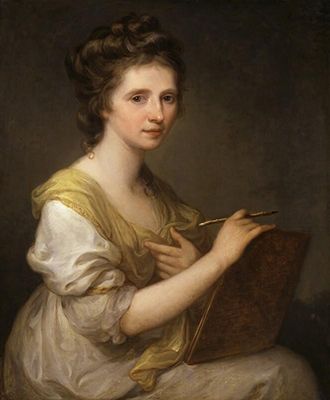
The mere experience of soaking up the beauty of artwork in major museums had to be a tremendous advantage. Angelica’s freedom to travel and study was uncommon indeed, as women rarely were allowed the opportunity because of barriers discussed previously in this series. Banned from classrooms, art studios, and restricted from social and daily activities, women were immeasurably handicapped. I often wonder how much more advanced global cultures could be without stultifying obstacles placed on women.
A Child Prodigy
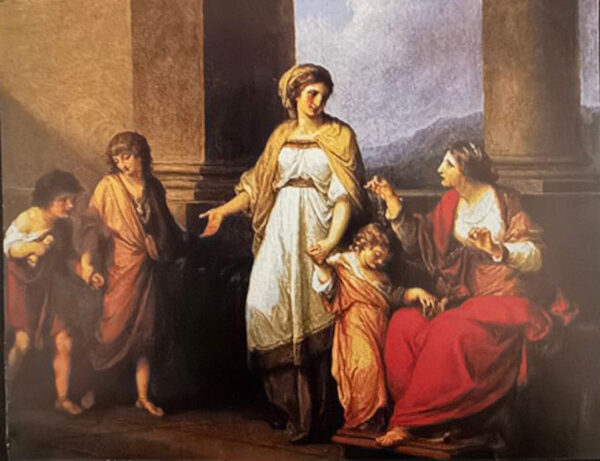
Born in 1741 to a successful painter father and talented musician mother, this child prodigy soared using her intellect and talent to the highest degree. Realizing she was forbidden to enter art classrooms, Kauffman independently studied plaster casts of male and female nudes to learn anatomy for her classical paintings containing the human form.
A Cultivated Woman
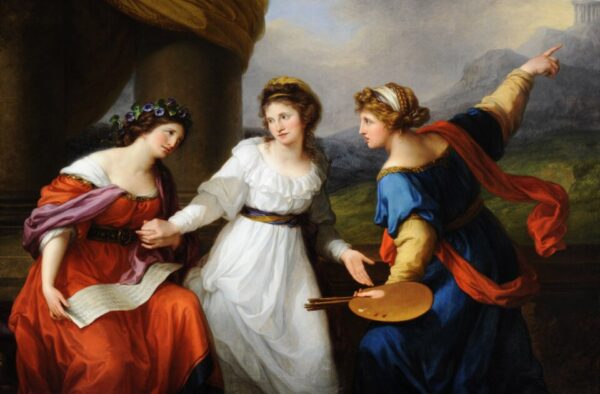
As the years passed, Angelica’s reputation as a highly skilled Neoclassical painter grew, and soon she was elected to Rome’s Accademia di San Luca and the Royal Academy (the only woman until the 20th century) in London. Her patrons were many, royal, and aristocratic. Four languages came fluently and easily, and one contemporary said of her, “she is possibly the most cultivated woman in Europe.” Most female artists rarely attempted large scale works, but the undaunted Kauffman created many huge canvases depicting stories from history, the Bible, literature, and mythology.
Conman and Fraud
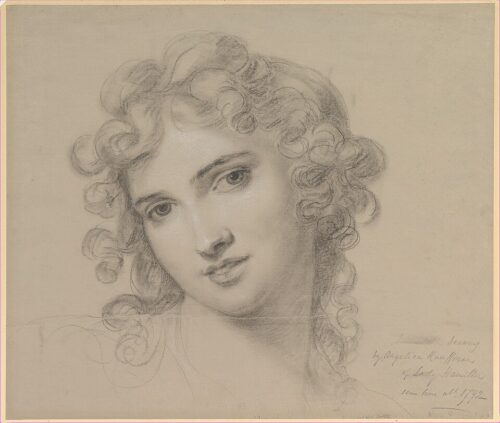
Angelica enjoyed a full life of travel, fame, entertainment, and good friends such as Joshua Reynolds, the actor David Garrick, and Lady Emma Hamilton. At the age of 26, Kauffman married a conman who fraudulently assumed the name Count Frederick de Horn. This already married fraud who flaunted a fake rich Swedish nobleman persona, demanded money from Angelica’s father. This colorful event did not taint her reputation, and after they paid off the menace, the Kauffmans were glad to be rid of him.
Friends in High Places
Once more, Angelica tried marriage, this time successfully to Antonio Pietro Zucchi, an Italian painter. The ever independently minded Angelica retained her maiden name which was unknown during this period. By this time, she had amassed substantial wealth and had a marriage contract that allowed her total control of her own money. Because she had no children, she devoted her life to her career. After relocating to Rome, Angelica founded a fruitful studio that became popular as an artist destination and an intellectually minded art lovers’ haven. Upon her death in 1807 at age 66, the sculptor Antonio Canova designed a grand funeral based upon that of the Italian Renaissance painter, Raphael.
Twenty-fifth and Final; Dancing Backwards Comes to an End
Angelica Kauffman was one of the most enlightened and monumentally successful female artists featured in my series Dancing Backwards in High Heels. Nonetheless, her fame and name rarely appear in artbooks or classrooms of today. I have certainly never known her name in all the years I have studied art and art history, until now. She is the 25th and final artist covered in this project with so many more to go. I wonder how long we will have to dance backwards before we go forward without reversing what we have gained.
Dancing Backwards Part 3: Reception, Saturday, September 12, 3 to 5 o’clock
Eight new paintings to be revealed, each inspired by the palette of the women artists featured in Dancing Backwards in High Heels Part 3. Please join us Saturday at the gallery!
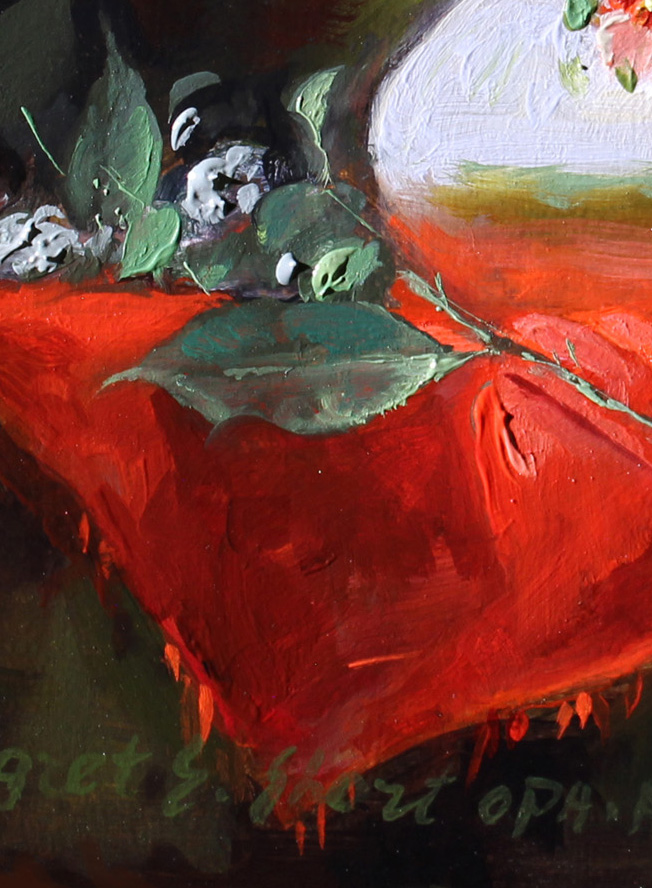
Art and lives of forgotten women artists discussed in this project titled Dancing Backwards in High Heels Coming this weekend September 12, 2026 at Bronze Coast Gallery, in Beautiful Cannon Beach, Oregon. The legend of ” Ginger Rogers did everything Fred Astaire did only backwards and in high heels.” Ann Richards.
The lives of each artist can be found here on this blog beginning in early 2025.
Leave a Reply